
Robotic surgery

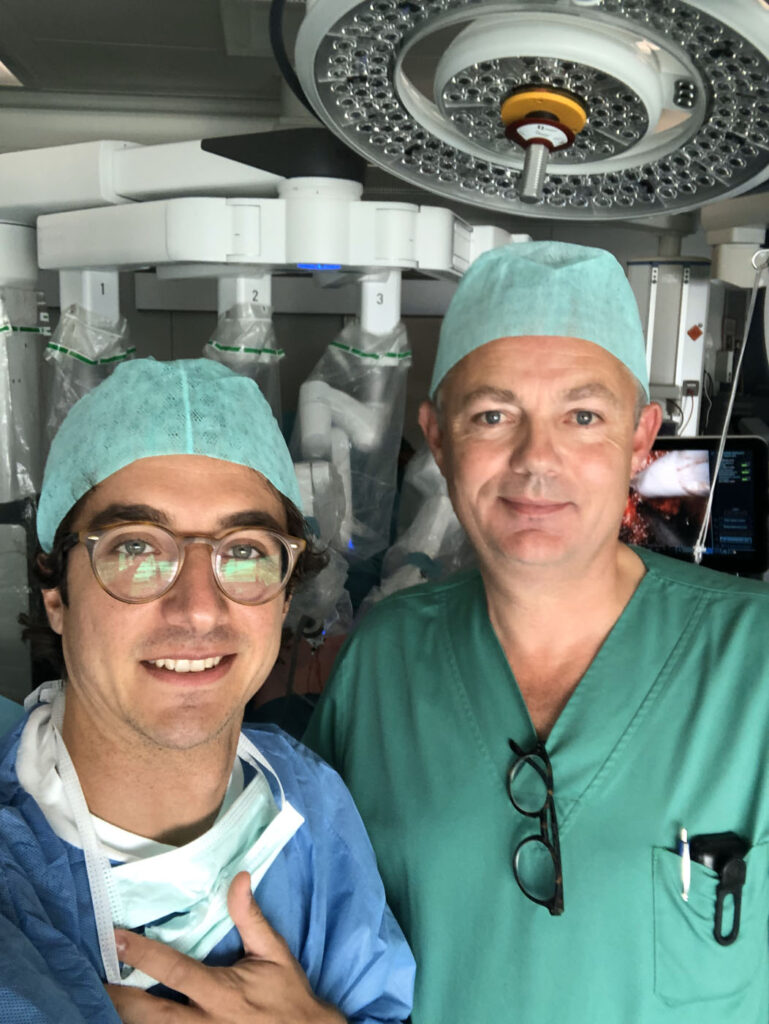
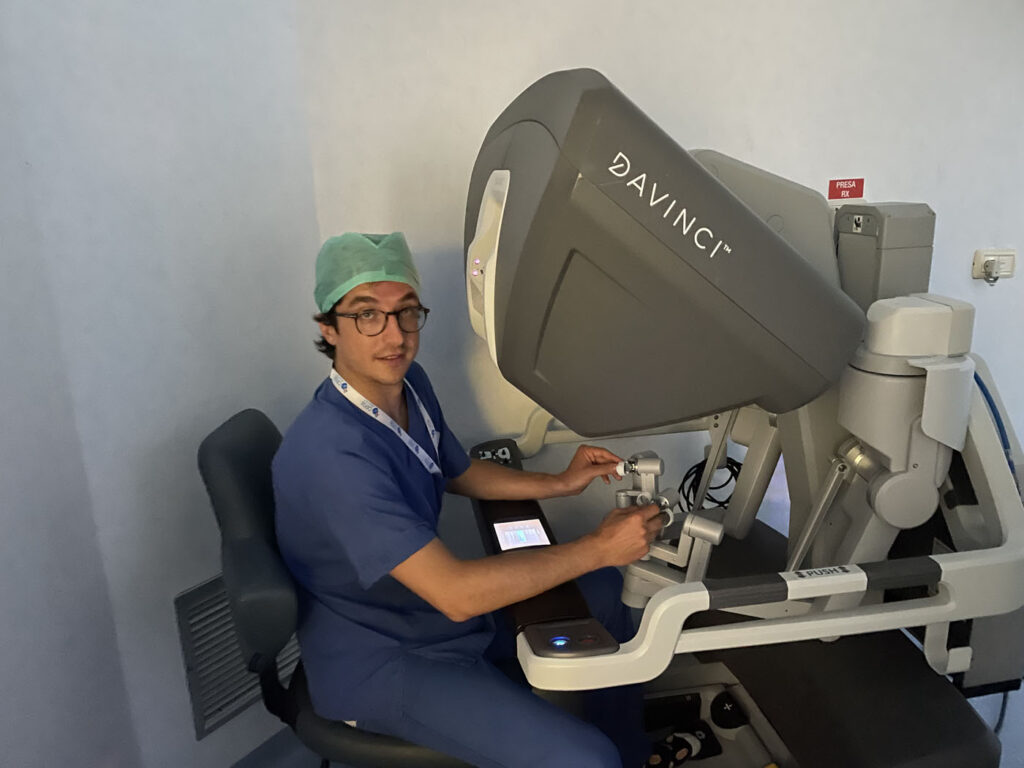
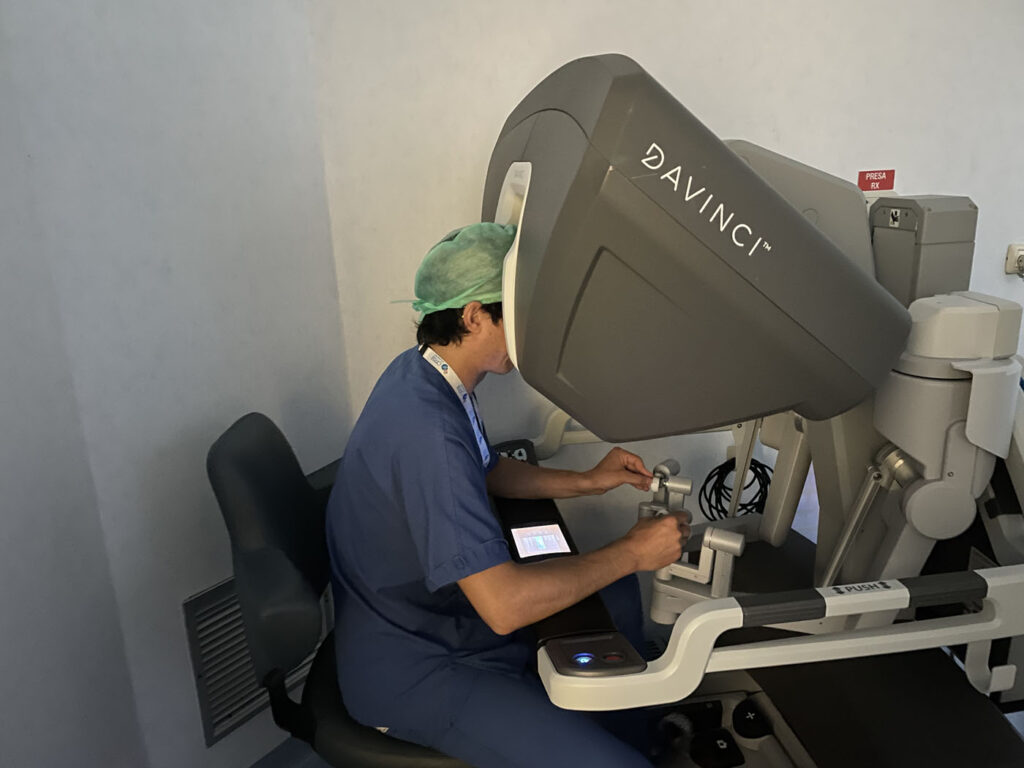
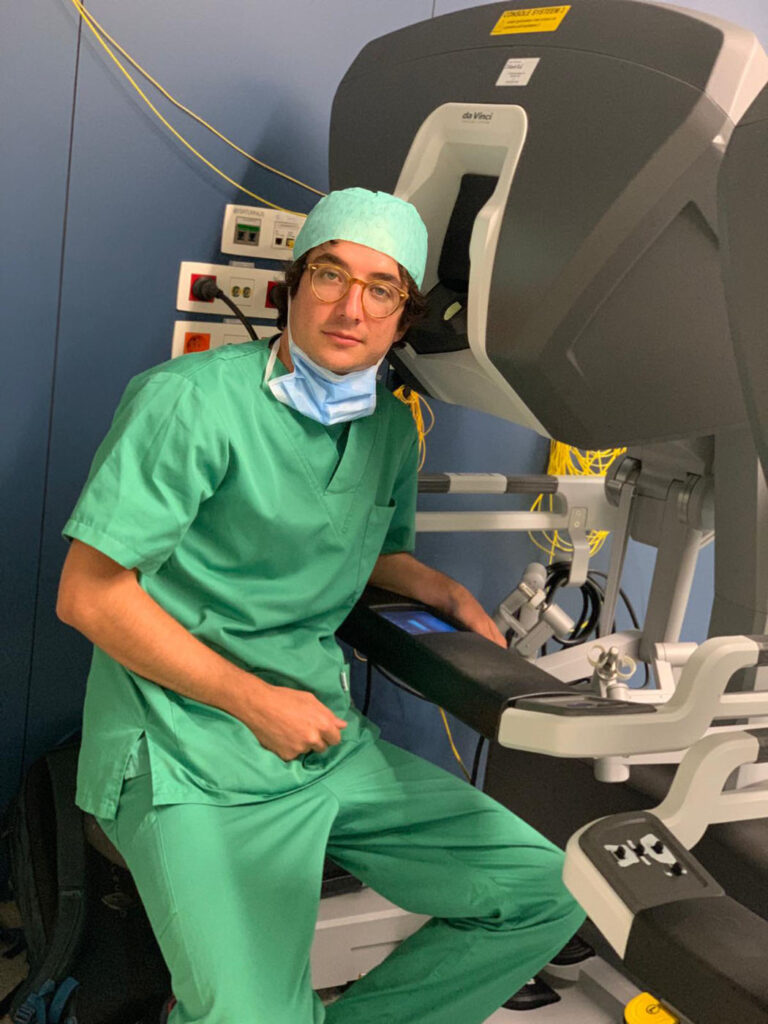
Since the very first year of his Residency Program (2012), Prof. Stefano Puliatti has been an active member of the robotic surgery team led by Prof. Giampaolo Bianchi, one of the pioneers in Italy who, as early as 2007, embraced this innovative technology and created a highly specialized working group. From 2019 to 2021, Prof. Puliatti spent two and a half years in Belgium alongside Prof. Alex Mottrie, internationally recognized as a leading expert in robotic urologic surgery, inventor of new techniques, innovator, and world-renowned surgeon.

During this period, Prof. Puliatti further specialized in robotic surgery for prostate and kidney, gaining extensive experience with different robotic platforms. His current clinical practice is mainly focused on robot-assisted oncologic surgery of the prostate, kidney, and bladder, with particular expertise in robot-assisted radical prostatectomy (with or without pelvic lymph node dissection), robot-assisted partial nephrectomy, and radical cystectomy with intracorporeal urinary reconstruction (orthotopic neobladder or totally intracorporeal uretero-ileal diversion) — procedures considered among the most advanced and technically demanding in the field of urology.

In addition to oncologic surgery, Prof. Puliatti performs robot-assisted reconstructive procedures, including pyeloplasty for ureteropelvic junction obstruction, management of complex urolithiasis not amenable to endoscopic treatment, and oncologic or reconstructive interventions in collaboration with pediatric urologists. He also works in close cooperation with gynecologic surgeons for combined procedures in patients with deep infiltrating endometriosis, offering a highly personalized, multidisciplinary approach.

The range of procedures that can be performed with robotic surgery is remarkably wide and allows for excellent oncologic and functional outcomes, while providing the well-recognized advantages of minimally invasive surgery: less postoperative pain, reduced blood loss, faster recovery, and improved quality of life for patients.

Robot-assisted radical prostatectomy

Robotic-assisted radical prostatectomy is performed to treat organ-confined prostate cancer. This is the most frequently diagnosed cancer in men.

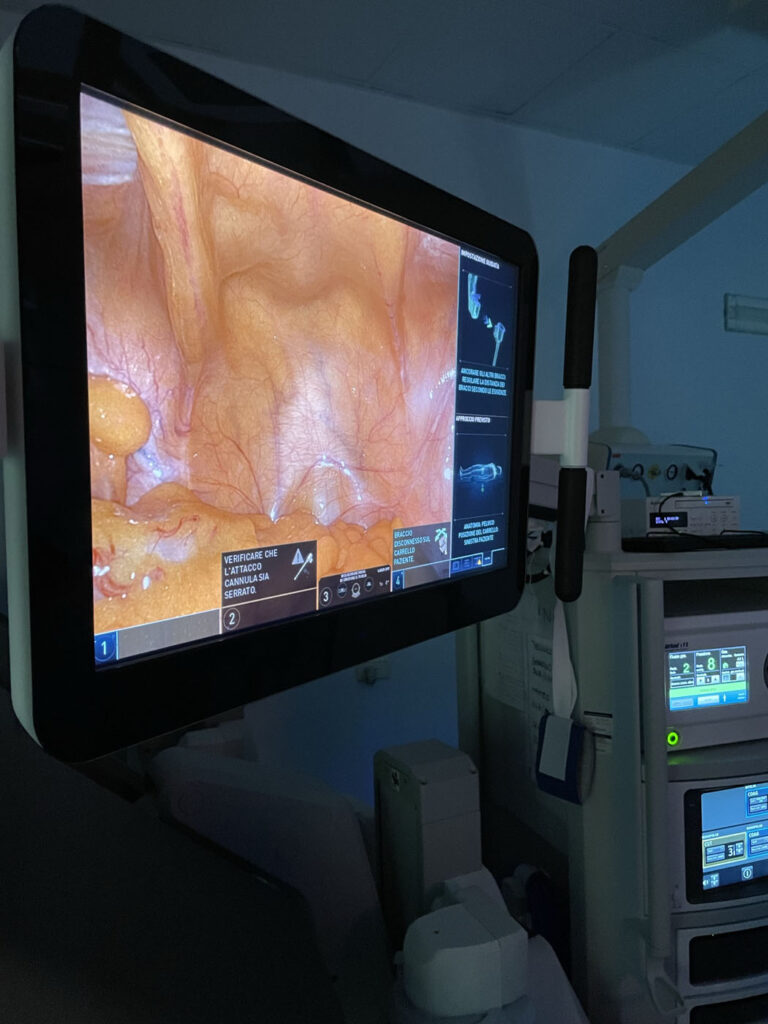
Robotic surgery represents the “gold standard” of surgical treatment of this neoplasm. In fact, it allows a shorter hospital stay, lower risks of bleeding, less pain, and can allow better aesthetic and functional results in terms of preservation of continence and sexual potency. Robotic surgery allows the surgeon a detailed and three-dimensional view of the anatomical structures. In addition, it provides 7 degrees of motion versus the 4 offered by traditional laparoscopy. This results in an accurate and precise dissection with the use of millimetric instruments.

The goal of this surgery is to treat the patient by removing the tumour while preserving the pre-existing quality of life as much as possible.

RADICAL NEPHRECTOMY AND ROBOT-ASSISTED NEPHROURETERECTOMY

Kidney tumors, renal pelvis and ureter tumors represent extremely dangerous pathologies. Often these cancers present themselves without signs or symptoms and are diagnosed incidentally in tests performed for other reasons. Sometimes these lesions require the removal of the entire kidney or kidney and ureter until it enters the bladder. Robotic surgery is also used for the execution of these procedures.This technology allows to obtain excellent aesthetic results, the reduction of postoperative pain and hospital stay with oncological outcomes comparable to those obtained in open surgery.

ROBOT-ASSISTED RENAL TUMORECTOMY

When the size and position of the neoformation allow it, it is possible to remove the kidney lesion while preserving the rest of the healthy tissue. This operation is called renal tumorectomy and allows the maximum preservation of the patient’s renal function with all the resulting advantages. Robot-assisted surgery is now widely used in this area with excellent results in terms of post-operative pain reduction, hospitalization time reduction, oncological radicality. The three-dimensional vision, the enlargement of the field of vision, the precision of the movements and the wide range of tools available allow the optimization of the procedure.

ROBOT-ASSISTED RADICAL CYSTECTOMY AND URINARY RECONSTRUCTION

Prof. Puliatti performs robot-assisted radical cystectomy, one of the most complex procedures in urologic oncology, indicated for patients with invasive bladder cancer. Thanks to his expertise, the surgery can be completed entirely with a minimally invasive robotic approach, including the delicate phase of urinary tract reconstruction.

Depending on the patient’s condition and oncologic indications, two main types of reconstructions can be performed:

  • Orthotopic Neobladder: the bladder is removed and replaced by a new reservoir, created using a segment of the patient’s intestine and connected to the urethra, thus allowing natural urination.
  • Uretero-ileal Conduit (Ileal Conduit or Bricker’s procedure): the ureters are connected to a short intestinal segment, which is then brought to the skin as a stoma. Urine is collected in an external device.

Both procedures are carried out intracorporeally with the robotic platform, offering the benefits of greater surgical precision, reduced blood loss, less postoperative pain, faster recovery, and excellent functional as well as oncologic outcomes.

CERTIFICATES AND CERTIFICATIONS

Certficate of Attendance

This is to certify that DR. STEFAN O PULIATTI has successfully completed the 2 day ‘Train the Trainer’ program for proficiency based progression for the CC-Erus host center.

Certficate of Excellence
European Society of Robotic Surgery

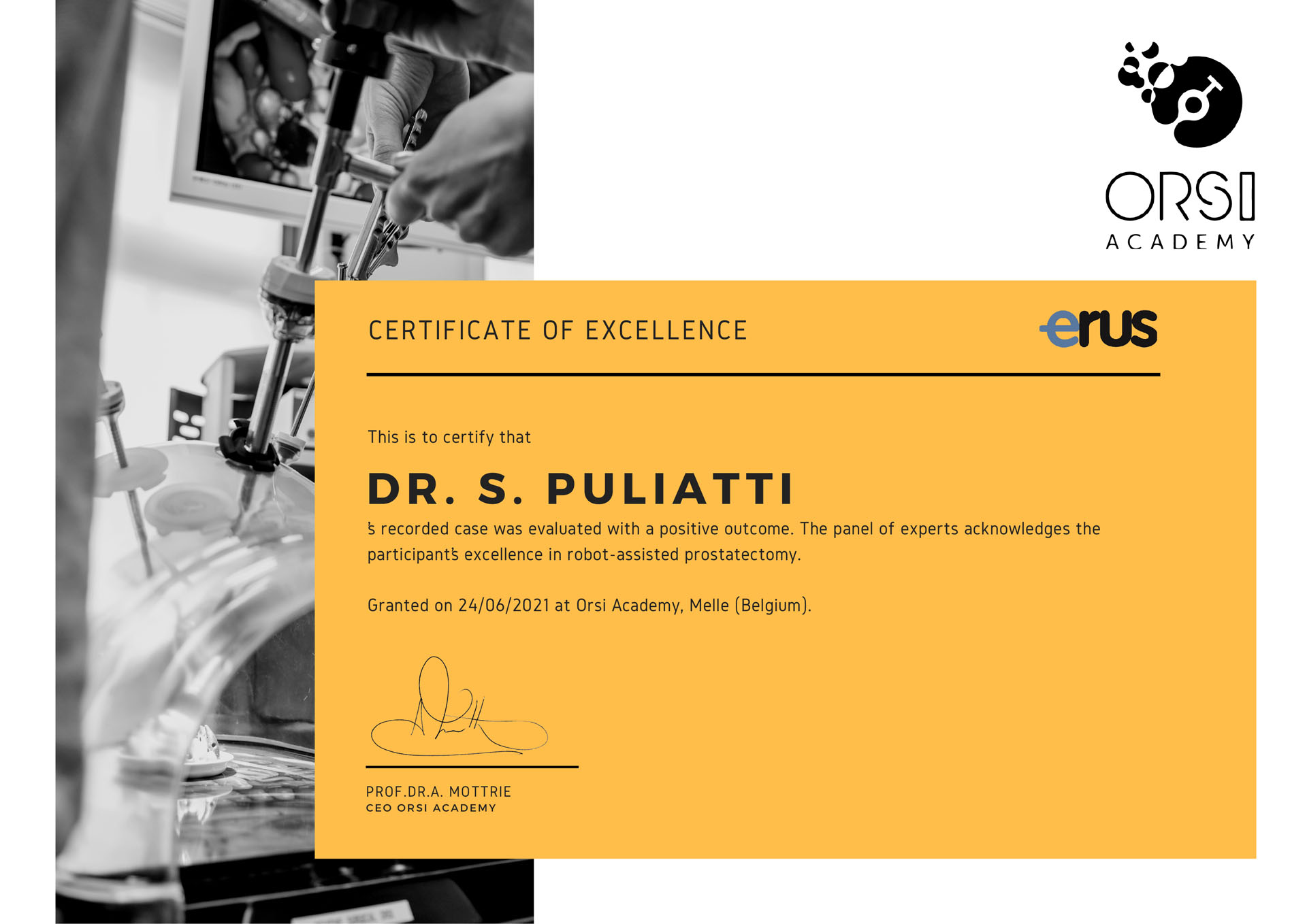
CERTIFICATE OF EXCELLENCE. This is to certify that DR. S. PULIATTI’s recorded case was evaluated with a positive outcome. The panel of experts acknowledges theparticipant’s excellence in robot-assisted prostatectomy.

Train the trainer certificate

The training adds the specific knowledge of robotic technology to an existing set of clinical skills. This program included theoretical and practical skill application sessions after which the individual performance was assessed. During those intensive 2 days, experience and expertise were interchanged amongst the participants and the aim of improving the teaching skills has been attained.

OTHER MEDICAL ACTIVITIES